Being Seen as Tender: Zoe Sorrell on Art, Humanity, and the Courage to Disrupt Comfort
Some conversations don’t rush toward answers.
They slow you down.
They ask you to sit with nuance.
They invite you into deeper questions rather than cleaner conclusions.
That’s what Zoe Sorrell brought into the Hot Seat.
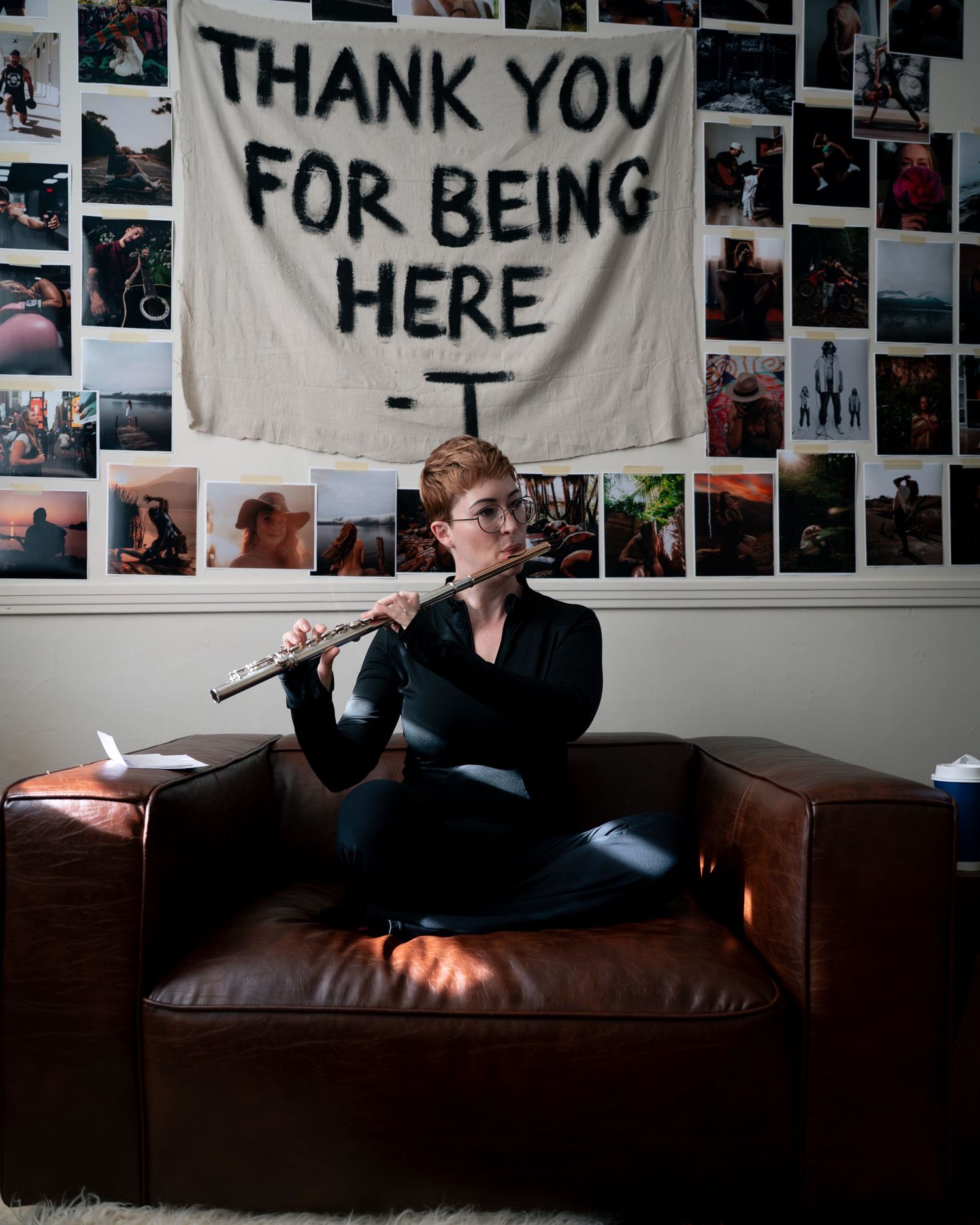
A flutist, dancer, writer, educator, and multidisciplinary artist, Zoe spoke from a place of thoughtfulness and embodiment — weaving together creativity, nervous system awareness, and the larger context of the world we’re living in.
Beyond competence
Zoe reflected on how much of her adult life was shaped by a desire to be seen as competent.
Competence felt safe. Reliable. Respectable.
But safety came at a cost.
Being seen only as capable left little room for tenderness, uncertainty, or vulnerability — the very qualities that make us human. Zoe named this shift clearly: the gradual release of needing to appear polished, and the growing willingness to be seen as unsure, soft, and real.
Authenticity, in this sense, wasn’t about self-expression alone. It was about self-allowance.
The wound of being unseen
One of the most resonant moments in Zoe’s Hot Seat was her honesty around a wound of feeling unseen.
Not invisible — but misseen. Looked at, yet not fully recognized.
She spoke to the complexity of not knowing whether this wound came from holding herself back or from simply not being in spaces that could truly see her. That distinction mattered.
It reframed fear of visibility not as a personal flaw, but as something relational. Contextual. Human.
Art in a heavy world
Zoe also spoke to a tension many artists are quietly holding: the fear of claiming that your art matters in a world that feels urgent, fragile, and overwhelmed.
There was humility in how she named this — acknowledging the gravity of the moment we’re living in while still advocating for creativity as essential.
For Zoe, art is not an escape from reality. It’s a reconnection to humanity.
She shared her belief that creativity helps reforge our relationship to ourselves, and that when we reconnect with our own humanity, we become more capable of seeing it in others.
Returning to the body
When asked when she feels most herself, Zoe didn’t hesitate.
Dance.
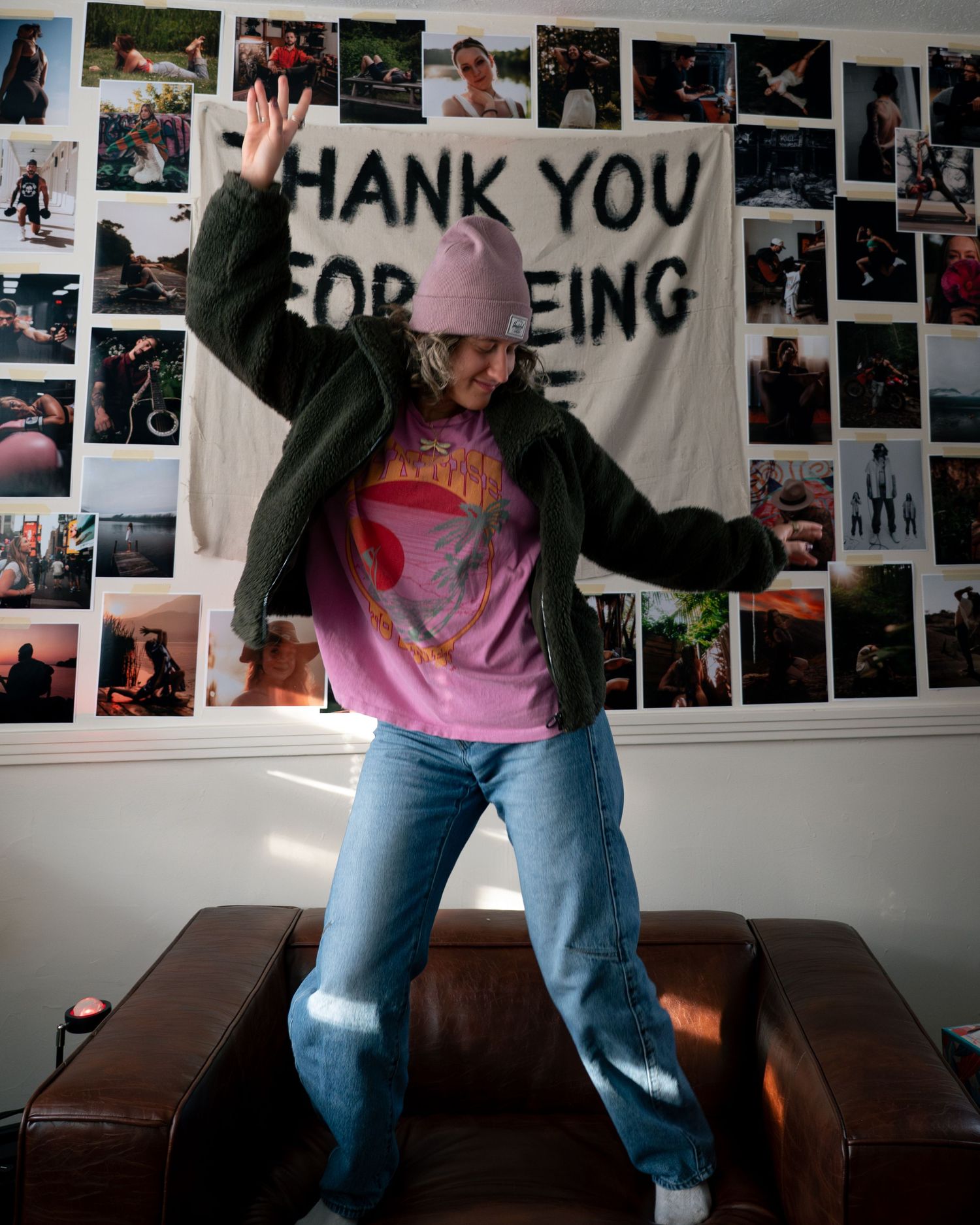
Movement became the place where mind and body reunite. Where self-consciousness softens. Where presence takes over.
Her reflections reminded me that authenticity isn’t only cognitive — it’s somatic. Sometimes we don’t think our way into ourselves. We move.
Disrupting comfort with integrity
Looking toward the future, Zoe spoke about people-pleasing as one of the biggest barriers between herself and deeper authenticity.
The conditioning to keep others comfortable. To avoid disruption. To smooth edges.
Her future self, she imagined, would invite her into a third way — not aggressive disruption, not self-erasure — but a calm, values-led willingness to unsettle comfort in service of truth.
That kind of courage is quiet. And radical.
What this conversation left me with
Sitting with Zoe reminded me that being seen isn’t always about becoming more visible.
Sometimes it’s about becoming more honest.
More embodied.
More tender.
More willing to let your work — and your humanity — take up space in the world.
Zoe’s Hot Seat was a reminder that artists are not peripheral to this moment.
They are essential to it.
Thank you for being here.
— T